
Mental health in schools doesn't always look like sadness or silence. It doesn't always appear as a student asking for help or sitting quietly in distress. In many cases, it shows up in ways that are less obvious and often misunderstood.
Sometimes it looks like:
- A student who is constantly restless and unable to sit still
- A student who becomes easily frustrated during tasks
- A student who shuts down and disengages from learning
- A student who reacts quickly or acts out in class
These behaviours are often seen as disruption. In many cases, though, they are not simply behavioural issues — they are signals that a student may be overwhelmed.
What we see vs. what's really happening
In a classroom, behaviour is what we notice first. Teachers and staff are required to respond quickly, often without knowing the underlying cause.
What we see:
- Inattention
- Defiance
- Withdrawal
- Emotional reactions
What may actually be happening:
- Sensory overload
- Anxiety or stress
- Difficulty regulating emotions
- Mental fatigue
Research shows that when students experience stress, their brains shift away from learning and toward coping. In this state, focus, memory and emotional control become significantly more difficult (Center on the Developing Child, 2016).
Supporting the student, not just the behaviour
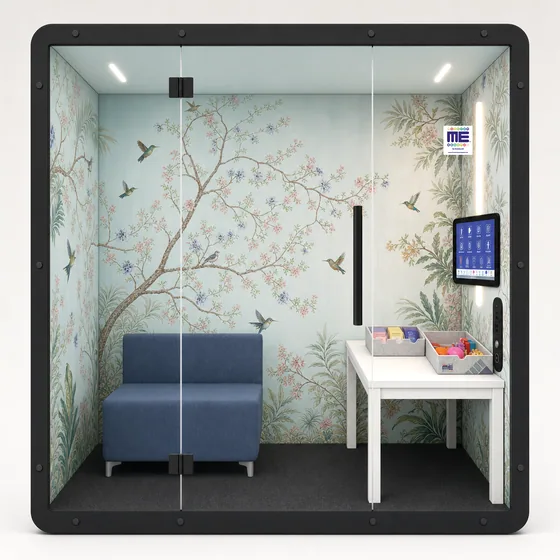
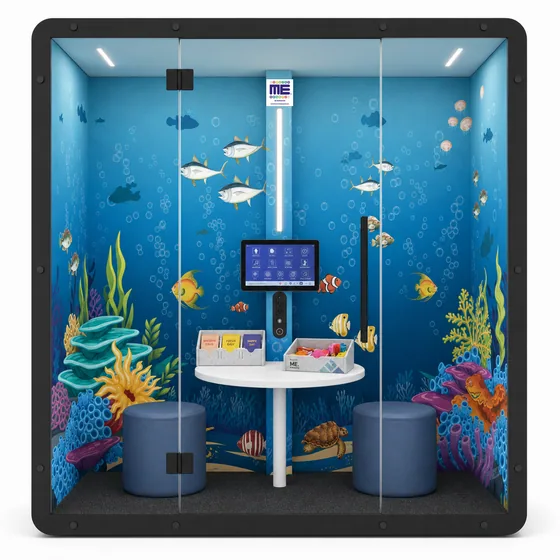
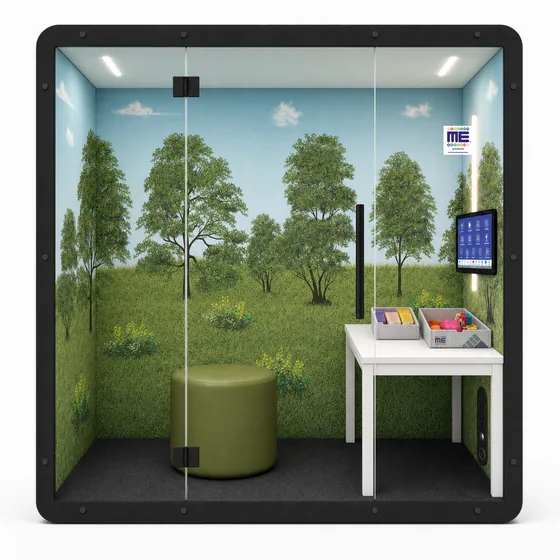
If behaviour is a form of communication, then support must go beyond managing what is visible. Students benefit from access to calm, predictable environments, opportunities to step away and regulate, and time to reset without falling behind academically.
Research in sensory processing and school environments shows that supportive, low-stimulation spaces can:
- Reduce stress and anxiety
- Improve emotional regulation
- Help students re-engage with tasks more effectively (Ashburner et al., 2008)
Why this matters
When students are supported in managing their internal state, their outward behaviour begins to change. This leads to:
- Fewer classroom disruptions
- Improved focus and participation
- More consistent learning experiences
- A calmer classroom environment overall
A more human way forward
Mental health does not always present itself in expected ways. It is not always visible, and it is not always easy to identify. But when educators take time to look beyond behaviour and consider what a student may be experiencing, the approach becomes more effective.
By creating environments that acknowledge stress, reduce overwhelm and allow students to regulate, schools can better support both learning and well-being.
References
- Center on the Developing Child, Harvard University. (2016). From Best Practices to Breakthrough Impacts: A Science-Based Approach to Building a More Promising Future for Young Children and Families.
- Ashburner, J., Ziviani, J., & Rodger, S. (2008). Sensory processing and classroom emotional, behavioral, and educational outcomes in children with autism spectrum disorder. American Journal of Occupational Therapy.